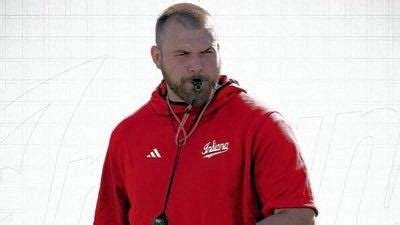
Strength and conditioning director Derek Owings has left Indiana for the University of Tennessee, signing a $1.2 million annual contract that sets a new benchmark in college football. The move comes immediately after Indiana’s first national championship and positions Owings as the highest‑paid S&C coach in the sport’s history, highlighting Tennessee’s commitment to elite player performance.
Details of Owings’ Move to Tennessee
Owings will assume the role of director of athletic performance at Tennessee, retaining the same title he held at Indiana. The contract, reported at $1.2 million per year, surpasses previous compensation levels for strength and conditioning staff and underscores the Vols’ strategic investment in player health and performance infrastructure.
Contract Highlights
- Annual salary: $1.2 million, the highest ever for a college S&C coach.
- Position: Director of athletic performance, overseeing conditioning, nutrition, and injury‑prevention programs.
- Term: Multi‑year agreement with performance incentives tied to team health metrics.
Who Is Derek Owings?
Derek Owings arrived in Bloomington in 2020 after a successful stint at the University of Georgia, where he contributed to a dominant defensive front. At Indiana, he revamped conditioning protocols, introduced data‑driven nutrition plans, and implemented advanced injury‑prevention strategies that helped the Hoosiers achieve a 12‑2 record and a national title.
Career Path and Impact at Indiana
Owings’ data‑focused approach blended cutting‑edge sports science with individualized athlete monitoring. Former players praised his “relentless attention to detail” and his ability to keep the roster healthy throughout a grueling season, fostering a culture of accountability that extended beyond the weight room.
Why Tennessee Invested $1.2M
The Vols aim to become a perennial SEC contender, and recent depth and durability issues on defense highlighted the need for a top‑tier conditioning program. By hiring Owings, Tennessee signals its intent to close the performance gap with powerhouses such as Georgia and Alabama.
Program Goals and Conditioning Needs
Tennessee’s coaching staff seeks to reduce injuries, improve player efficiency, and sustain elite performance week in and week out. Owings’ expertise in sports science and individualized training is expected to elevate the team’s overall competitiveness and support deeper postseason runs.
Implications for Indiana Football
Losing the architect of their championship conditioning program presents a short‑term challenge for Indiana. Head coach Tom Allen must identify a successor capable of maintaining the high standards set by Owings as the Hoosiers prepare for spring practices and the upcoming recruiting cycle.
Challenges and Opportunities
Continuity is crucial for Indiana’s athletic department. The recent national title enhances the program’s brand, potentially attracting top talent to fill the vacant S&C role and allowing the Hoosiers to build on their recent success.
Broader Impact on College Football
Owings’ transition highlights the growing importance of strength and conditioning staff in the modern college football landscape. As programs recognize that player development extends beyond X’s and O’s, investments in elite S&C personnel are becoming a key differentiator between contenders and participants.
S&C Market Trends
The $1.2 million salary sets a new market benchmark. If Owings delivers measurable improvements—fewer injuries, higher efficiency, and deeper postseason runs—other programs may feel compelled to match or exceed his compensation, further inflating the market for top S&C talent.
Looking Ahead to the 2026 Season
All eyes will be on Tennessee’s weight rooms as Owings implements his philosophy with the Vols’ roster. Meanwhile, Indiana must preserve the momentum that propelled them to a historic championship. The success of this high‑profile hire will shape recruiting narratives, locker‑room dynamics, and conference standings throughout the 2026 season and beyond.
What to Watch in Tennessee’s Weight Room
Key indicators will include reduced injury rates, improved player performance metrics, and the integration of advanced sports‑science technologies. Monitoring these factors will reveal whether Tennessee’s $1.2 million investment translates into on‑field success.