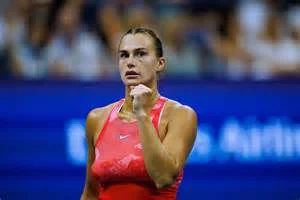
World No. 1 Aryna Sabalenka confirmed her dominance at the 2026 Australian Open by surviving a tight fourth‑round battle with teen sensation Victoria Mboko and then crushing Iva Jović 6‑3, 6‑0 in the quarter‑finals. The Belarusian’s 31‑winner display and mental resilience signal a powerful push to cement her reign and pursue a long‑term Grand Slam legacy.
Fourth‑Round Survival Against Victoria Mboko
Sabalenka entered the fourth round facing 19‑year‑old Canadian prodigy Victoria Mboko, who had already risen to a top‑20 ranking. After racing to a 6‑2, 3‑1 lead in the second set, Sabalenka weathered three match points as Mboko forced a tense tie‑break. The world No. 1 ultimately prevailed 7‑6(5), demonstrating that even a dominant champion can be tested by hungry newcomers.
Quarter‑Final Statement vs Iva Jović
Two days later Sabalenka unleashed a clinical performance against Serbia’s Iva Jović. She fired 31 winners while committing only 17 unforced errors, cruising to a 6‑3, 6‑0 victory. Describing the match as “the best tennis of my season,” Sabalenka sent a clear message that her offensive arsenal and mental focus are back in full force.
Sabalenka’s Rise to World No. 1
Born on 5 May 1998 in Minsk, Sabalenka burst onto the WTA Tour in the early 2020s. By 2023 she captured the world No. 1 singles ranking and previously topped the doubles chart, showcasing rare versatility. Her game combines a ferocious serve, thunderous forehand, and relentless baseline aggression, while her mental fortitude separates her from many peers.
Focus on Longevity and Career Planning
Inspired by Novak Djokovic’s durability, Sabalenka has spoken openly about aiming to compete at the highest level into her late thirties. She now emphasizes injury‑prevention training, nutrition, and mental conditioning, signaling a commitment to remain a fixture at the top of the women’s tour for years to come.
Impact on the WTA Landscape
Sabalenka’s Melbourne run reinforces her status as the benchmark for consistency. Rising stars will need new strategies to breach her defenses, potentially accelerating tactical evolution across the circuit. Her longevity mindset may also inspire peers to prioritize sustainable career planning over early peaks, influencing how players approach the demanding 52‑week season.
Future Outlook: Clay Season and Grand Slam Prospects
With the Australian Open behind her, Sabalenka turns her attention to the upcoming clay‑court swing. Her recent statistics—over 30 winners per match with fewer than 20 errors—suggest she can adapt her power game to slower surfaces. Maintaining the blend of aggression and composure that defined her Melbourne performance could add another Grand Slam title to her résumé before the season ends.