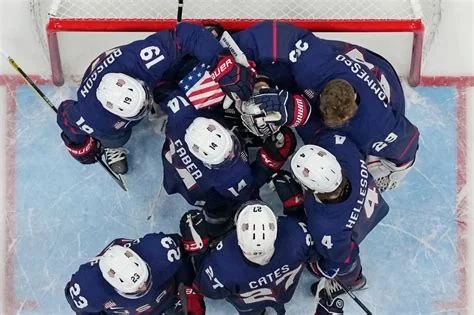
The United States men’s hockey team captured Olympic gold with a 2‑1 overtime win over Canada, but the celebration quickly turned into a political firestorm. A phone call from President Trump and an unplanned toast with FBI Director Kash Patel sparked criticism, while a missed “too many men on the ice” penalty added on‑ice controversy. The fallout raises questions about athlete conduct, political boundaries, and future policy.
The Trump Call: Locker Room Reaction
What Happened
Immediately after the final horn, a phone rang in the locker room. President Trump called, and forward Jack Eichel handed the handset to captain Blake Cole. During the brief exchange, Trump made a crude remark about the team’s “girls,” prompting laughter from the players. The comment spread rapidly on social media, putting the team’s response under intense scrutiny.
Public Reaction
Critics argue the players’ laughter trivialized a misogynistic comment and that the team should have taken a stronger stance. Supporters contend the reaction was a spontaneous, light‑hearted moment after a hard‑fought victory. The incident has spotlighted the expectations placed on athletes as public figures.
FBI Director Kash Patel’s Unexpected Appearance
Details of the Visit
The following day, a video emerged showing FBI Director Kash Patel entering the U.S. locker room and raising a glass of champagne with the players. The unexpected appearance raised questions about protocol and the appropriateness of a senior law‑enforcement official joining a private celebration.
Consequences
Initial statements downplayed the incident, but later confirmations revealed Patel had traveled to Milan on a taxpayer‑funded trip. The revelation sparked accusations of misuse of government resources for personal leisure and prompted calls for greater oversight of senior officials’ travel practices.
On‑Ice Controversy: “Too Many Men on the Ice” Call
Missed Penalty
During overtime, referees failed to call a “too many men on the ice” infraction when a fourth American player entered the offensive zone before the whistle. Video analysis shows the violation could have resulted in a penalty, though it did not alter the final outcome.
Impact on Game Perception
The missed call fueled allegations of favoritism and prompted a review by the International Ice Hockey Federation (IIHF), highlighting concerns about consistency in officiating high‑stakes matches.
Reactions Across the Hockey Community
- Former Olympian Ryan Suter warned that celebrations belong on the ice, not in the political arena.
- Coach Jeff Blashill emphasized that the team’s focus remains on sport and national honor.
- Former NHL players defended the locker‑room privacy, arguing teammates need a space to decompress after a grueling tournament.
- Women’s advocacy groups called for a formal apology for laughing at a sexist comment and urged stricter conduct codes.
Implications for Sport and Nation
The controversy arrives as the NHL and USA Hockey grapple with broader issues of athlete activism and political expression. The involvement of a sitting president and a senior FBI official blurs the line between sport and statecraft, potentially setting a precedent for future political incursions into athletes’ celebrations.
From a governance perspective, the U.S. Olympic & Paralympic Committee now faces pressure to clarify policies regarding political figures’ presence in athletes’ private spaces, while the FBI may face internal audits to tighten travel guidelines for senior officials.
Sports Psychologist Perspective
Dr. Emily Hart, a sports psychologist who works with elite hockey teams, explained that post‑game environments are critical for mental decompression. She warned that when this space becomes a stage for political commentary—especially involving sexist remarks—it can undermine team culture and send the wrong message to younger fans. Hart advised that teams establish clear protocols for handling unsolicited political contact and that leadership model immediate, respectful responses aligned with broader societal values.
Looking Ahead
As the dust settles, Team USA’s historic gold medal remains an undeniable achievement. The U.S. Olympic & Paralympic Committee has announced a review of locker‑room access policies and will convene a panel to discuss appropriate responses to political communications during international competitions. The team now must balance the pride of Olympic triumph with the scrutiny that follows a high‑profile victory, shaping the future dialogue on sport, politics, and public perception.