Alexander Zverev, world No. 4, announced a decisive tactical overhaul at the Mexican Open in Acapulco, swapping endurance‑focused training for a power‑centric game plan. After a five‑hour, five‑set loss to world No. 1 Carlos Alcaraz at the Australian Open, Zverev vows to hit harder, shorten points, and conserve energy, aiming to reclaim a top‑10 spot and reshape the 2026 ATP landscape.
The “Hit Harder” Mantra
In a candid press conference before his first match since the Melbourne semi‑final, Zverev outlined his new game plan: “I’ve realized that the extra miles in the gym won’t close the gap against the very best. What I need is to hit the ball harder, to take control of the point earlier, and to give my opponents less time to react.” The German’s statement underscored a departure from the prevailing narrative that elite players must continuously chase higher fitness levels to stay competitive.
Why Power Over Endurance?
Zverev’s rationale is rooted in the brutal reality of his recent loss. He attributed the defeat to fatigue, noting that the relentless five‑set duel left his body depleted and his shot selection tentative in the decisive moments. “I was playing the right way for most of the match, but the physical toll made me hesitant on the big points,” he explained. By focusing on a more aggressive, high‑velocity approach, Zverev hopes to shorten rallies, conserve energy, and re‑assert his status as a top‑10 threat.
From Melbourne to Acapulco: The Road So Far
The Australian Open semi‑final was a historic encounter. Zverev clawed back from two sets down to force a fifth‑set showdown, only to fall 7‑5 in a marathon that tested both men’s stamina and mental fortitude. The match, the longest semi‑final of the Open Era, highlighted Zverev’s resilience but also exposed the limits of a style predicated on extended baseline exchanges.
Following the loss, Zverev took a three‑week hiatus—his longest break since turning pro—to recover physically, reset mentally, and reflect on his tactical toolbox. The pause also gave him time to embrace a new role: fatherhood. Zverev, who welcomed his daughter in late 2023, spoke openly about his desire for her to have a “normal childhood” despite his high‑profile career. “I want her to be a normal child, not a tennis‑court celebrity,” he said, emphasizing his commitment to balancing family life with the demands of the tour.
Acapulco: A Testing Ground
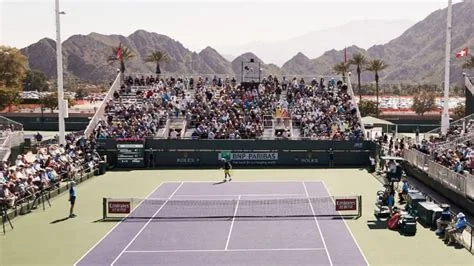
Acapulco offers a perfect crucible for Zverev’s revamped approach. The tournament’s slower red clay demands patience, yet also rewards players who can dictate play with heavy, penetrating groundstrokes. Zverev’s first opponent—a rising South American qualifier—presented an ideal scenario to unleash his “hit harder” philosophy without the pressure of a marquee clash.
Early practice sessions revealed a noticeable uptick in Zverev’s serve velocity, clocking in the high 120‑mph range, and a more aggressive second‑serve strategy. His forehand, already a weapon, was deliberately stepped up, with a focus on flattening the ball to reduce the opponent’s reaction time. The German’s coach, Peter Lund, corroborated the shift: “We’ve been fine‑tuning his swing path to maximize racquet head speed while preserving control. It’s a calculated risk, but one that could pay dividends if he can sustain the power throughout a match.”
Implications for the Season
If Zverev can effectively integrate this power‑centric blueprint, the ramifications extend beyond his personal results. A resurgence from the No. 4 spot would re‑ignite a three‑way battle for the top‑three positions, pressuring the likes of Alcaraz, Novak Djokovic and Jannik Sinner. Moreover, Zverev’s public pivot could spark a broader tactical dialogue on the ATP Tour: is the era of ultra‑endurance tennis giving way to a renaissance of aggressive baseline play?
Conversely, the plan carries inherent risks. Overreliance on power can invite unforced errors, especially on slower surfaces where margins are thin. Zverev’s recent injury history—particularly a shoulder issue that surfaced in 2022—means a sustained power output could exacerbate wear and tear. The German’s own admission that he will monitor his body closely underscores a cautious optimism.
Scientific Perspective
Sports scientist Dr. Lena Kraus, who consults with several top‑10 players, weighed in on Zverev’s strategy. “From a physiological standpoint, shifting the emphasis from aerobic endurance to anaerobic power production can be effective if the athlete’s neuromuscular systems are primed. Zverev’s height (6’6”) and long levers naturally lend themselves to generating high racquet head speed. However, the transition must be underpinned by a robust strength‑conditioning program to mitigate injury risk. The three‑week layoff he took is a sensible micro‑cycle to allow super‑compensation—where muscle fibers rebuild stronger after a stress‑free interval. If he can maintain his kinetic chain efficiency, the ‘hit harder’ approach could indeed elevate his win probability on clay, where point construction often hinges on who can seize the initiative first.”
Looking Ahead
Zverev’s upcoming schedule after Acapulco includes a potential swing into the European clay swing—Monte Carlo, Barcelona and eventually Roland Garros. A successful implementation of his power‑first doctrine could provide momentum heading into the French Open, a tournament where his heavy groundstrokes have historically thrived.
For now, the tennis world watches as the German star re‑writes his narrative. Whether the new plan translates into deeper runs, titles, or simply a refreshed confidence will become evident over the next few weeks. One thing is clear: Zverev is refusing to settle for a passive recovery narrative. He is choosing to confront his rivals with a louder, harder voice—one that could reverberate across the ATP Tour and reshape the power dynamics of the 2026 season.
In a sport where marginal gains separate champions from contenders, Alexander Zverev’s decision to prioritize hitting harder over being physically fitter may well be the bold gamble that re‑establishes him among the elite. The coming matches in Acapulco will be the first litmus test of a plan that could define his year—and perhaps influence the broader strategic currents of modern tennis.