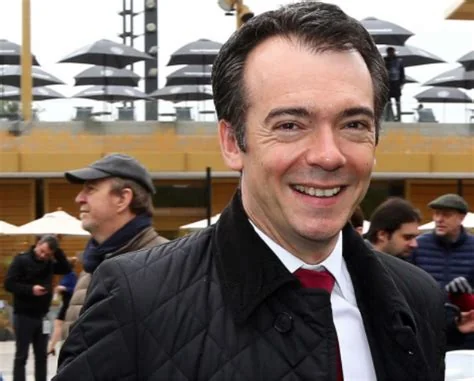
On February 25, 2024, Cyril Linette announced his immediate resignation as director‑general of the COJOP, the committee responsible for the 2030 Winter Olympic Games in the French Alps. His departure ends a two‑week standoff with committee president Edgar Grospiron over budget discipline, venue upgrades and sustainability strategy, raising concerns about leadership continuity and the Games’ financial and environmental goals.
What Happened?
Cyril Linette, a veteran sports administrator from the Ardennes, was appointed director‑general of the COJOP in early 2024 to manage the massive logistical, financial and legacy‑building effort required to host the Winter Games. On February 25, the committee issued a brief statement: “After two weeks of major disagreements with President Edgar Grospiron, Mr. Cyril Linette has decided to leave his position as director‑general, effective immediately.” While framed as a personal decision, the resignation follows a growing rift over venue selection, budget allocations and the pace of sustainability initiatives that became evident in early February.
Background: A Stormy Partnership
Edgar Grospiron, a former World Cup alpine champion turned sports executive, was elected president of the COJOP in 2022 with a mandate to create “Games of the People,” emphasizing community involvement, eco‑friendly infrastructure and a strong regional legacy. Linette brought a reputation for meticulous project management and a track record of delivering large‑scale sporting events on time and within budget.
Initially, the partnership appeared complementary: Grospiron’s visionary zeal paired with Linette’s operational rigor. As the preparatory phase entered its final stretch, the two leaders diverged sharply. Linette pushed for tighter fiscal discipline, warning that the projected €3.2 billion budget risked overruns without stricter cost‑control. Grospiron, meanwhile, advocated accelerated venue upgrades and a broader community‑engagement program, even if it meant stretching the budget.
The disagreement intensified after a mid‑January review of the “Green Games” sustainability plan. Linette warned that proposed carbon‑offset measures were insufficiently quantified, while Grospiron pushed for a faster rollout of renewable‑energy installations. By February 12, the COJOP’s coordination board formally recorded “irreconcilable disagreements” between the two executives.
Implications for the 2030 Winter Games
Linette’s exit creates a leadership vacuum at a critical stage, with less than a decade remaining before the Games. He oversaw procurement of key infrastructure contracts, coordination with national and regional authorities, and integration of sustainability benchmarks. His departure may delay finalizing venue plans for the ski resorts of La Plagne and Val‑Thorens, as well as the construction of the Olympic Village slated for completion in 2029.
From a governance perspective, the split highlights the fragility of large‑scale sport‑event planning where political, commercial and environmental priorities intersect. Analysts warn that a public leadership dispute could erode stakeholder confidence, especially among sponsors who have pledged €450 million under the promise of a “green, inclusive” event. The International Olympic Committee has so far issued a measured response, noting that “the COJOP remains fully committed to delivering a successful Winter Games and will ensure a smooth transition in leadership.”
The resignation also opens the door for a strategic recalibration. If the committee leans more heavily into Grospiron’s vision, we could see an accelerated push for community‑driven projects such as local youth sport programmes and a broader cultural festival surrounding the Games. Conversely, a rushed shift could jeopardize the financial discipline Linette championed, potentially inflating costs and inviting criticism from fiscal watchdogs.
Industry Expert Perspective
Jean‑Michel Bouchard, a veteran French sports event manager who oversaw the 1992 Winter Olympics in Albertville, weighed in on the fallout:
“Leadership cohesion is the cornerstone of any mega‑sporting event. When the director‑general and the president are at loggerheads, the whole organisational machine feels the tremor. Cyril Linette’s exit is a stark reminder that even seasoned administrators can be undone by strategic misalignment. The COJOP now needs a clear succession plan and a reinforced governance framework to keep the Games on track. If they manage the transition wisely, the episode could actually sharpen focus on the core objectives—financial prudence and sustainable legacy—rather than leaving the committee adrift.”
Bouchard’s caution underscores a broader lesson: the success of the 2030 Winter Games will hinge not only on venue readiness but also on the organising committee’s ability to reconcile divergent visions and maintain a unified command structure.
Looking Ahead
The COJOP has announced that an interim director‑general will be appointed within the next 48 hours, with a formal search for a permanent replacement to commence immediately. The committee’s board, chaired by Grospiron, has pledged to maintain transparency with stakeholders, including local authorities, athletes’ representatives and the IOC.
For now, the winter‑sports community watches closely. The 2030 Winter Olympics promise to be a hallmark of sustainability and community involvement, but the recent leadership turbulence serves as a reminder that the path to a successful Games is rarely smooth. As the organising body navigates this turning point, the decisions made in the coming weeks will shape not only the logistical blueprint but also the narrative of how France will host a truly “Games of the People.”